The man who hidone hundred and twenty+ paintingsfrom the Taliban.
A physician turned painter. A secret technique. And three years of deception that preserved a nation's visual memory.
Chapter I — The artist and the regime
In September 1996, Taliban fighters swept into Kabul, forcing President Burhanuddin Rabbani into exile. Among their first acts: a sweeping ban on all depictions of living creatures. Paintings, photographs, sculptures — ordered destroyed. A new government department, the Ministry for the Propagation of Virtue and the Prevention of Vice, began enforcing the ban immediately, tearing apart decades of Afghan visual culture.
Dr. Mohammad Yousof Asefi had abandoned medicine the year before to devote himself entirely to painting. For years, his canvases had hung in Afghanistan's most important buildings — around sixty of his paintings were displayed between the presidential palace and the Foreign Ministry alone.
Now the Taliban was destroying it all. In the regime's first days, around 300 paintings stockpiled at the Ministry of Information and Culture — works by many of Afghanistan's artists, some of them Dr. Asefi's own — were destroyed. At the presidential palace, about seventeen of his paintings were torn from the walls. Among the first of them was his oil painting of Buzkashi, the traditional Afghan horseback sport. "When I got the news that my Buzkashi painting had been destroyed, I was sick for days," he later told Voice of America.
He had never considered himself political. But watching the systematic erasure of his country's visual memory changed him. A generation of Afghans had known only war. Art was how a culture remembered itself. Without it, there would be nothing left to return to.
He began to think.
Chapter II — The concealment
Photo: Sebastião Salgado — @sebastiaosalgadooficial
Taliban seize Kabul
The Taliban seized Kabul in September 1996, forcing President Rabbani into exile. Within days, their Ministry for the Propagation of Virtue and Prevention of Vice began enforcing a strict interpretation of Sharia. Depictions of living creatures — people, animals — were declared immoral and banned outright. The Taliban created a new government department to enforce the ban, and the systematic destruction of Afghan visual culture began.
Art destruction begins
The Vice and Virtue Ministry began systematically destroying art across Kabul. Around 300 paintings stockpiled at the Ministry of Information and Culture were destroyed upon the regime's arrival — works by many Afghan artists, some by Dr. Asefi himself. At the presidential palace, about seventeen of his paintings were destroyed, including his beloved painting of Buzkashi, the traditional Afghan horseback sport. Of the roughly sixty of his works displayed between the palace and the Foreign Ministry, most would not survive the regime. The Taliban would go on to destroy the Bamiyan Buddhas in 2001, but the destruction of art began from the very first days of their rule.
The plan begins
In 1998, officials at the Foreign Ministry approached Dr. Asefi. They knew his background — before the Taliban, he had restored and produced paintings for the ministry — and asked him to repair several works that had been damaged during the civil war. He accepted the commission. And then, alone in those halls, surrounded by paintings the regime had marked for destruction — most of them valuable works by foreign artists, alongside some of his own — he began to form a plan far more audacious than any restoration.
The concealment
Working in absolute secrecy at the Foreign Ministry, Dr. Asefi altered 42 paintings. His method was both simple and brilliant: he painted watercolor foliage, bushes, and landscapes directly over the human figures and animals in each canvas. The Taliban inspectors saw harmless scenery. The oil paint beneath — the original figures, the original life — was perfectly preserved. Watercolor is water-soluble; oil is not. When the regime fell, a wet sponge would be enough to bring everything back. The work was emotionally and psychologically devastating. He understood that he would be jailed, beaten, and possibly killed if the Taliban realized what he was doing. He told no one — not his wife, not his colleagues, not a single soul.
Painting in secret
Throughout the Taliban years, Dr. Asefi continued to paint new works in secret at his home — landscapes with people and animals that he could neither show nor sell. If the Vice and Virtue Ministry had discovered what he was painting, they would have destroyed the works and beaten him within an inch of his life. His home studio became a private act of defiance.
National Gallery saved
Through the Minister of Information and Culture, Dr. Asefi had obtained permission to "repair" paintings at the National Gallery, beginning in 1999. The Minister had his Deputy inform the head of the Gallery to grant Asefi access. Deputy Said Enayat Ullah was aware of what he was truly doing — and would alert him when Taliban members were in the building, giving him time to switch from concealment work to ordinary restoration in the small second-floor room where he worked. After the Taliban destroyed the Bamiyan Buddhas in March 2001 and — as fellow artist Ismaiel Seddeqi warned — turned their attention to the gallery's collection, the quiet concealment became a race against the regime. In all, he altered about 80 paintings there — works of his own, of other Afghan artists, and of international artists. Across the Foreign Ministry and the National Gallery, he also genuinely restored about 70 damaged works: the cover story that made the deception possible.
Taliban ousted from Kabul
In late 2001, following the September 11 attacks and the U.S.-led military campaign, the Taliban were driven from Kabul. For the first time in five years, Dr. Asefi could breathe. He spent the following seven months carefully removing the watercolor paint from every canvas he had altered — revealing the original figures, the original life, exactly as he had left them.
The world finds out
A fellow member of the Artists' Union organized a press event at the National Gallery on December 13, 2001. Twenty-five international media organizations attended. Dr. Asefi demonstrated his technique live: a wet sponge moved slowly across a canvas, and a girl holding a basket of flowers emerged from beneath the paint. The audience fell silent. The National Gallery Director and the Deputy at the Ministry of Information and Culture also spoke, discussing the cultural value of the paintings saved. The story spread around the world overnight.
The Trick — Hidden in plain sight
The technique · 1998 – 2001
Watercolor over oil. Two kinds of paint that do not mix — one permanent, one that surrenders to a wet sponge. Dr. Asefi painted harmless scenery directly over the figures the Taliban had condemned, matching the colors so precisely that the regime's inspectors saw nothing. Move the handle to do what he did when the Taliban fell: wipe the concealment away.
The technique, demonstrated — archival footage from the National Gallery, Kabul
Drag the handle to compare each stage
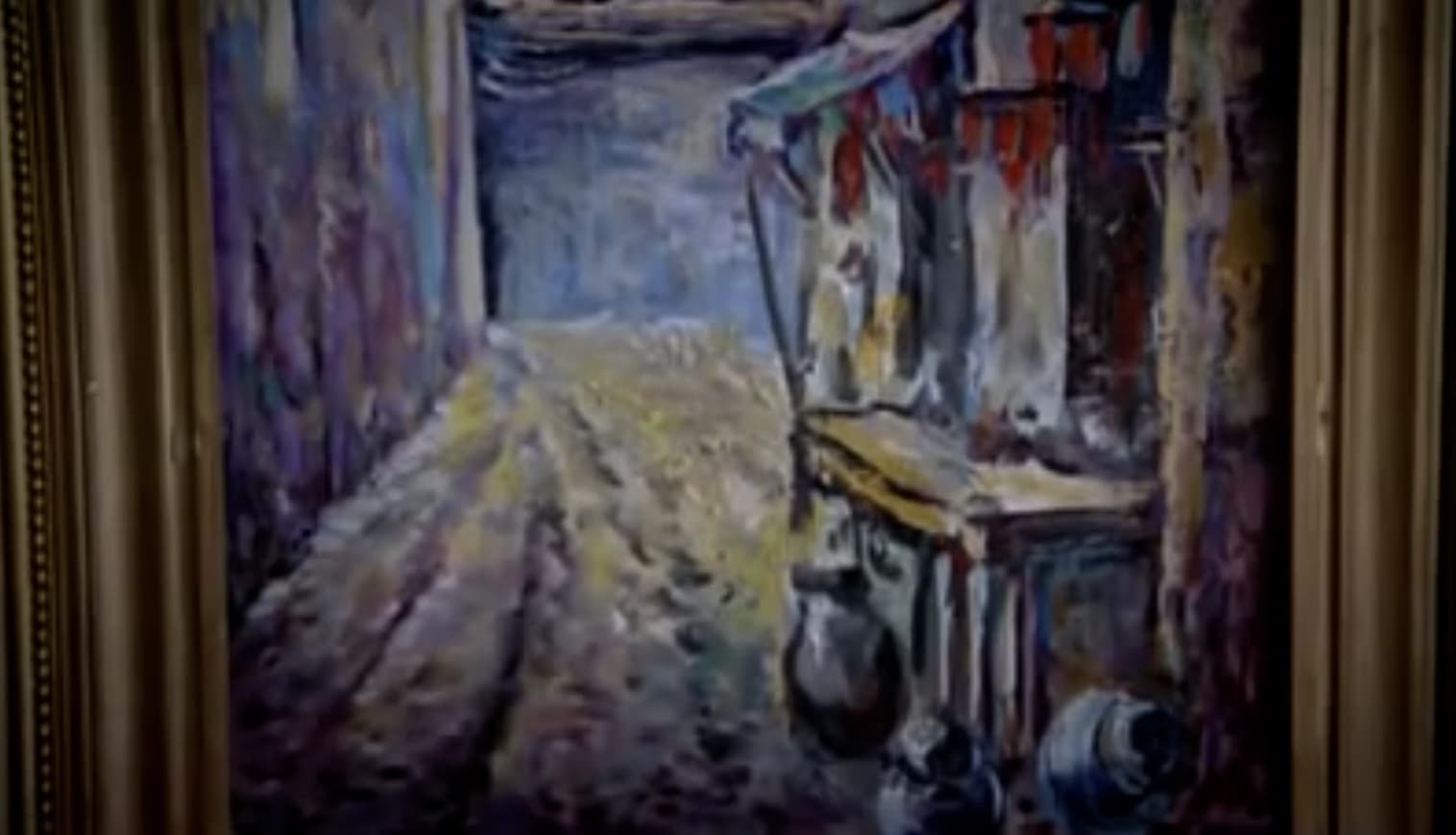
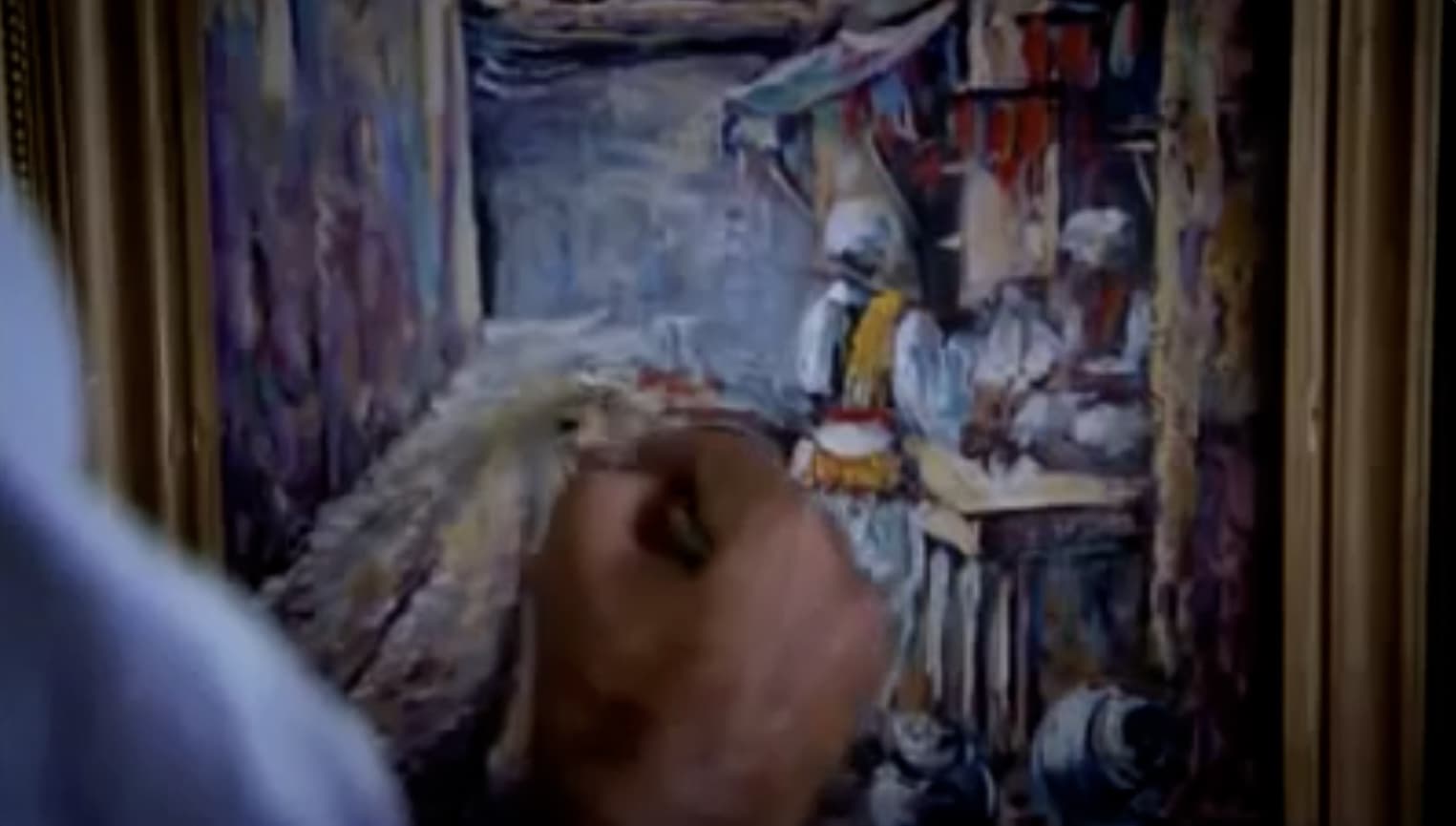
Before and after concealment — the original oil painting, and the same canvas once Dr. Asefi had painted watercolor over its figures
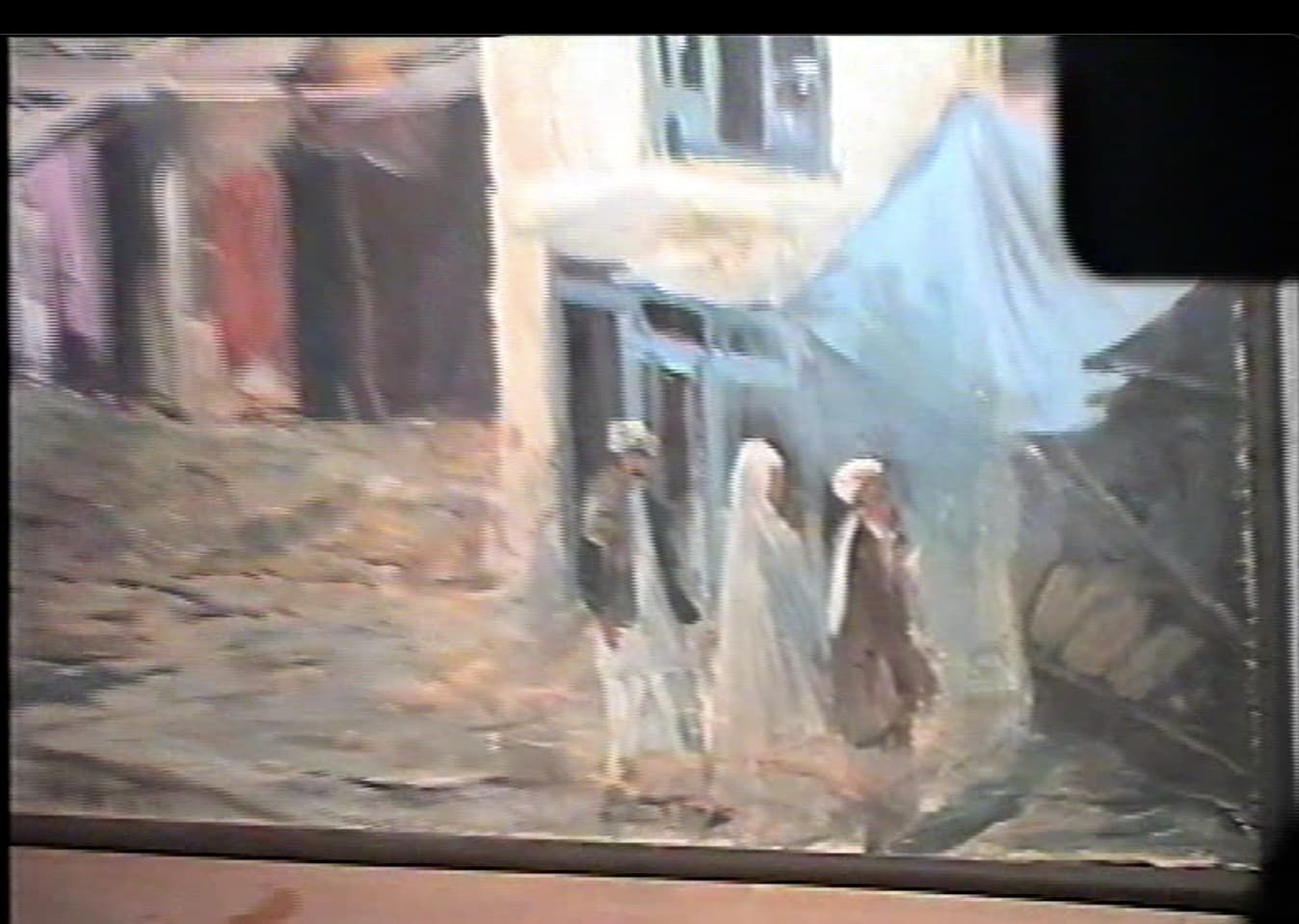
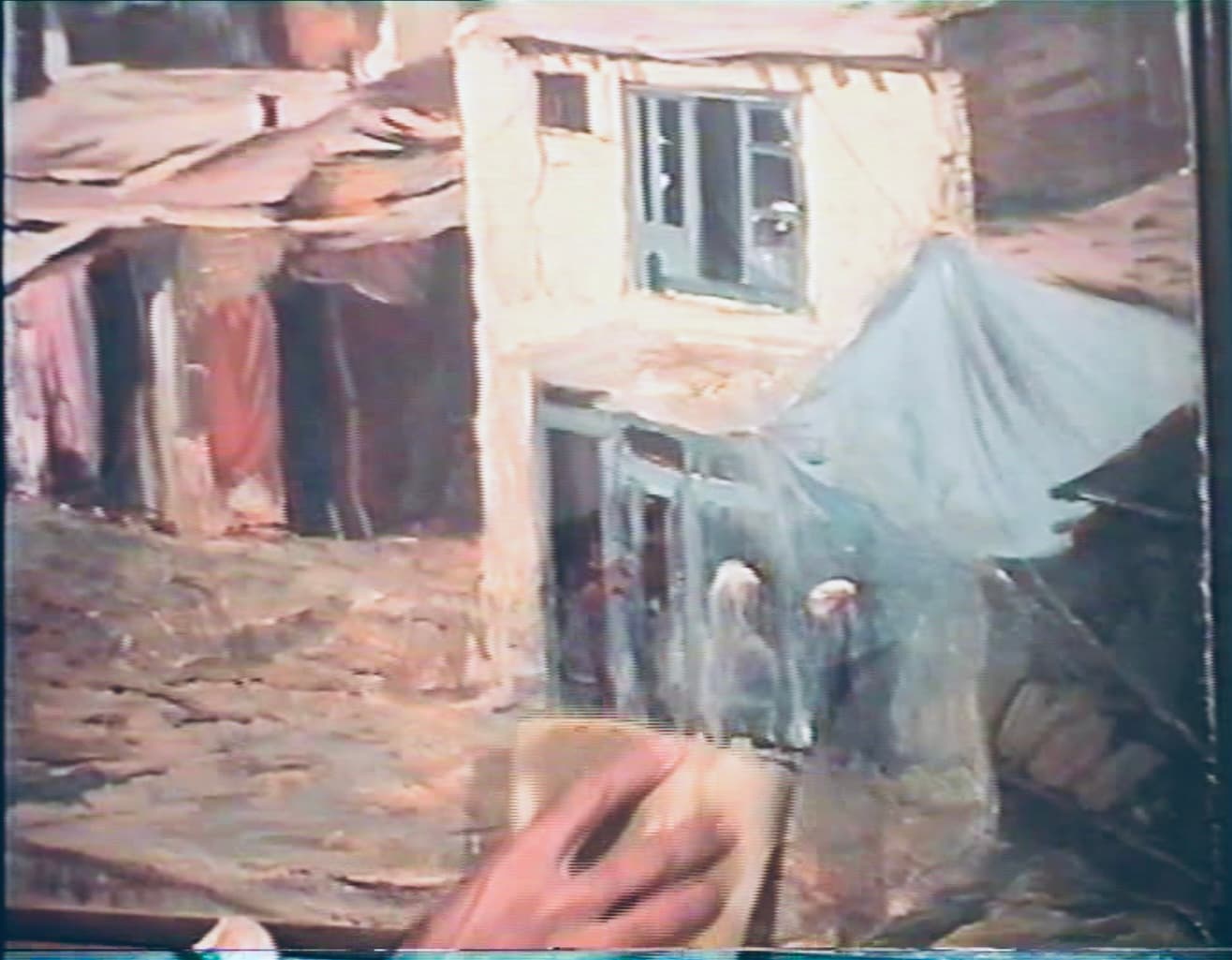
Concealment and revelation — the hidden figures, and the same canvas as the watercolor is wiped away with a wet sponge
Chapter III — The revelation
In February 2002, Hamid Karzai, then head of the interim government, attended the formal reopening of the National Gallery. Asefi repeated the demonstration. He gently rubbed a wet sponge over a painting, revealing a girl holding a basket of flowers. The audience — Afghan officials, international diplomats, journalists — watched a nation's memory return from beneath a layer of paint.
In the months and years that followed, Dr. Asefi was interviewed by The New York Times, The Washington Post, Radio Free Europe, Voice of America, and dozens of other international outlets. He re-enacted the demonstration from the National Gallery reopening numerous times. In 2004, National Geographic interviewed him and nominated him for an international award. The interview was excerpted in National Geographic's documentary "Lost Treasures of Afghanistan."
In 2005, a delegation from the United States National Endowment for the Humanities traveled to Kabul to present him with a commendation for his "extraordinary and heroic role in the defense of Afghan culture." Former U.S. Ambassador Ronald E. Neumann later sought him out after hearing about him and seeing one of his paintings hanging in President Karzai's office.
Foreign Minister Dr. Abdullah Abdullah asked him to decorate the Foreign Ministry with new paintings for a conference of neighboring countries. President Karzai commissioned him to redecorate the presidential palace and the Marmarin Palace. His works were placed in both the old and new parliament buildings, the Prime Minister's building, and a room in the National Gallery, which was named after him.
Dr. Asefi removes the watercolor before President Karzai — National Gallery, Kabul
The ambassador at the gallery
Among those who came to see the recovered paintings was Ryan C. Crocker, one of America's most decorated diplomats — a six-time U.S. ambassador who reopened the U.S. Embassy in Kabul in January 2002, after more than twelve years of closure, and later returned as U.S. Ambassador to Afghanistan. In the same archival footage, Dr. Asefi unveils one of the concealed paintings before him, wiping the watercolor away as the ambassador watches.
Dr. Asefi unveils a concealed painting before Ambassador Ryan C. Crocker — National Gallery, Kabul (1:45:40 – 1:47:02)
The Full Footage — Watch both films in full
The excerpts above are drawn from two longer films. For the complete record — the National Geographic documentary, and the full archival footage in which Dr. Asefi wipes clean more than fifteen paintings for presidents, ambassadors, and the international press — watch both in full below.
National Geographic, "Lost Treasures of Afghanistan" (2004) — the documentary that followed his nomination for an international award.
Full archival footage of the National Gallery reveal — including President Karzai (1:17:24) and Ambassador Ryan C. Crocker (1:45:40).
As reported worldwide
Featured in National Geographic's documentary "Lost Treasures of Afghanistan" and nominated by National Geographic for an international award in 2004. Interviewed by The New York Times, The Washington Post, Radio Free Europe, and Voice of America following the National Gallery reveal in December 2001. Invited artist at dOCUMENTA (13), Kassel, 2012.
NYT · Washington Post · RFE/RL · VOA · 2001–2002 — National Geographic · 2004 — U.S. National Endowment for the Humanities commendation · 2005 — dOCUMENTA (13) · 2012
The art world takes note — dOCUMENTA (13)
Kassel, Germany · 2012
dOCUMENTA (13)
In 2012, Dr. Asefi was included in dOCUMENTA (13) in Kassel, Germany — one of the most important contemporary art exhibitions in the world, held once every five years. Curated by Carolyn Christov-Bakargiev, that edition drew more than 900,000 visitors and, for the first time, extended part of the exhibition to Kabul.
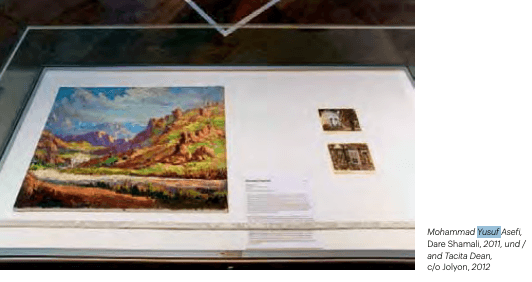
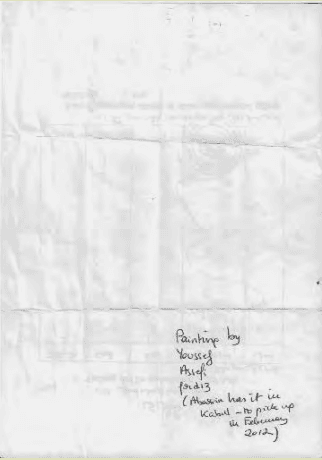
Dr. Asefi did not travel to Germany. The documenta team came to him: they visited Kabul, interviewed him about the years of concealment, and purchased a painting — "Dare Shamali" (2011) — to carry back to Kassel. It was collected from Kabul in February 2012, a detail still recorded in the handwritten note on the back of the canvas.
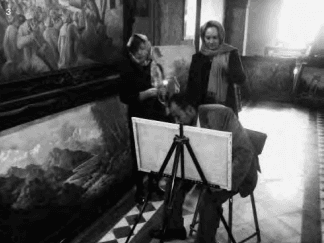
The painting was displayed in the rotunda of the Museum Fridericianum — the space the curator called "the Brain," the conceptual heart of the exhibition — presented in a vitrine alongside work by Tacita Dean, and documented in the exhibition's official Logbook and catalog. His name stands in documenta's official artist list: Asefi, Mohammad Yusuf.
The inclusion carried a particular weight. The unassuming landscape shown in Kassel embodied the very technique that had saved more than 120 works in Kabul — concealment as an act of preservation, now exhibited to the world as art in its own right.
After the triumph — The gallery attacked
In 1995, after an exhibition at the Kabul Municipality, President Burhanuddin Rabbani gifted Dr. Asefi a plot of land in recognition of his talent and years of work. On that land, in 2003, he founded the Asefi Art Gallery — one of the largest art spaces in Kabul, second in size only to the National Gallery of Afghanistan.
The gallery's official opening was delayed again and again by the situation in Afghanistan. In 2014, while plans for an opening ceremony were underway, Dr. Asefi received a phone call. The Taliban told him they were aware of his affiliations with American officials and that the gallery building housed a university with female students — many of whom did not follow the Taliban's dress codes. He cancelled the opening plans and had the university vacate the building.
About six months later, a bomb detonated at the south gate of the gallery property. No one was hurt, but the blast caused considerable damage to the single-story information office on the grounds.
About six months after that, in 2015, a second bomb — packed inside a car — detonated along the west wall of the property on the main road. The force of the explosion shattered the gallery's glass facade, damaged most of the window frames, and caused significant damage to the walls and ceilings inside. Many paintings were damaged. Dr. Asefi's wife and all of their sons except Mosawer, who was at school, were inside. His son Najim was in the information office in the adjacent building. Several family members sustained minor physical injuries. The psychological toll was severe.
Dr. Asefi submitted requests to the Afghan government for assistance with repairs but received none. He spent the next several years and a considerable amount of his own money rebuilding. His only installation artwork — a sculpture assembled from the debris — stands as a question: Why were innocent Afghans the target?
In 2018, Dr. Asefi was appointed cultural advisor to the Meshrano Jirga, the Upper House of the Afghanistan Parliament. The gallery, rebuilt and filled with his work, was still awaiting its long-delayed official opening when the Taliban retook Kabul in August 2021. It has never officially opened, and it remains closed today.
In those days of August 2021, two of his sons — Mosawer Asefi and Mohammad Najim Asefi — did what their father had done twenty-three years earlier: they hid the paintings. Every canvas of Dr. Asefi's bearing a human or animal figure was concealed as the regime returned to the city. The instinct to save art from the Taliban had passed to the next generation.
Installation artwork — “The Aftermath of Suicide,” 2015
Asefi Art Gallery — damage from the car bombing
The gallery, rebuilt — still awaiting its official opening
Today — Arizona State University · 2022 –
In April 2022, Dr. Asefi arrived in the United States on a visa sponsored by Arizona State University, accompanied by his wife Nahid and their youngest son Mosawer. He had left behind a six-story gallery, a lifetime of commissions on the walls of palaces and parliaments, and a country that the Taliban had reclaimed. He could not go back. The Taliban maintains a list of those who defied them, and his name — the man who hid more than 120 paintings under their noses — is on it.
Still Painting, Still Resisting
From his studio in Tempe, Arizona, Dr. Asefi has continued to paint with the same intensity that defined his decades in Kabul. But the subjects have shifted. The Grand Canyon, the Sonoran desert, the light of the American Southwest — these now appear alongside a very different kind of work. Several of his recent canvases depict Afghan women carrying books to schools that no longer exist for them, women reaching for an education that the Taliban has systematically denied. Others address the broader crisis: the erasure of women from public life, the banning of girls from secondary school and university, the dismantling of the cultural institutions he spent his life building. These are not abstract protests. They are the work of a man who watched the Vice and Virtue Ministry destroy hundreds of paintings, who rebuilt a gallery after two bombings, and who now paints the consequences of a regime he has opposed for nearly three decades. For Dr. Asefi, painting has never been separate from resistance. Under the first Taliban government, he hid art in plain sight. Under the second, he paints what they forbid — from the safety of a country where such work is still possible.
Dr. Asefi in Arizona — painting the struggle of Afghan women denied education
War and Emotion
In October 2022, forty-three of Dr. Asefi's paintings went on display at Arizona State University's Harry Wood Gallery in an exhibition titled "War and Emotion" — his first since leaving Kabul. The works included Arizona landscapes alongside paintings that confronted the situation in Afghanistan directly: the struggle of women trying to get an education, the weight of displacement, the emotional toll of watching a homeland fall.
In October 2024, ASU's Center for the Study of Religion and Conflict — where he serves as the inaugural artist-in-residence — presented "The Brush is Mightier: One Man's Mission to Rescue Art from the Taliban," a gallery open house at which Dr. Asefi painted new works live before the audience, a practice he has carried from the National Gallery demonstration in 2001 to the lecture halls of an American university.
And the story continues. In July 2026, with support from a National Endowment for the Humanities Chairman's Grant, his work travels to Washington, D.C.: "Repression, Resilience and Renewal: Religious Freedom and the Art of Mohammad Yousof Asefi," a three-day public exhibition (July 21–23) at the Ambassador Barbara Barrett & Justice O'Connor Washington Center, closing with the panel "The Courage to Create: Art, Humanity, and Religious Freedom." The events mark the anniversary of the NEH's 2005 commendation. Twenty years on — and even far from his country — he is still answering repression the same way: by painting.
"War and Emotion" — Harry Wood Gallery, Arizona State University, October 2022
A Life's Work, Unfinished
From the presidential palace in Kabul to a university gallery in Tempe. From the civil wars of the 1980s to the fall of Kabul in 2021. More than four decades of paintings across four continents and twelve countries — and the work is not done. Dr. Asefi remains a proponent of artistic freedom and its importance to the culture of Afghanistan. He is certain that the Taliban will punish him and his family for these beliefs if forced to return. The absence of art on the streets of Kabul is now visible to anyone who looks: murals replaced by propaganda, beauty salon photographs torn or painted over to hide women's faces, the Foundation for Culture and Civil Society raided and its paintings destroyed. Afghan artists of all kinds have fled the country, mostly to Europe. Dr. Asefi continues from Arizona — painting, exhibiting, and bearing witness to what has been lost and what endures.
More than four decades of work — from the presidential palace to Arizona