Asefi Art Gallery
Dr. Mohammad Yousof Asefi
Artist · Physician · Cultural Preservationist
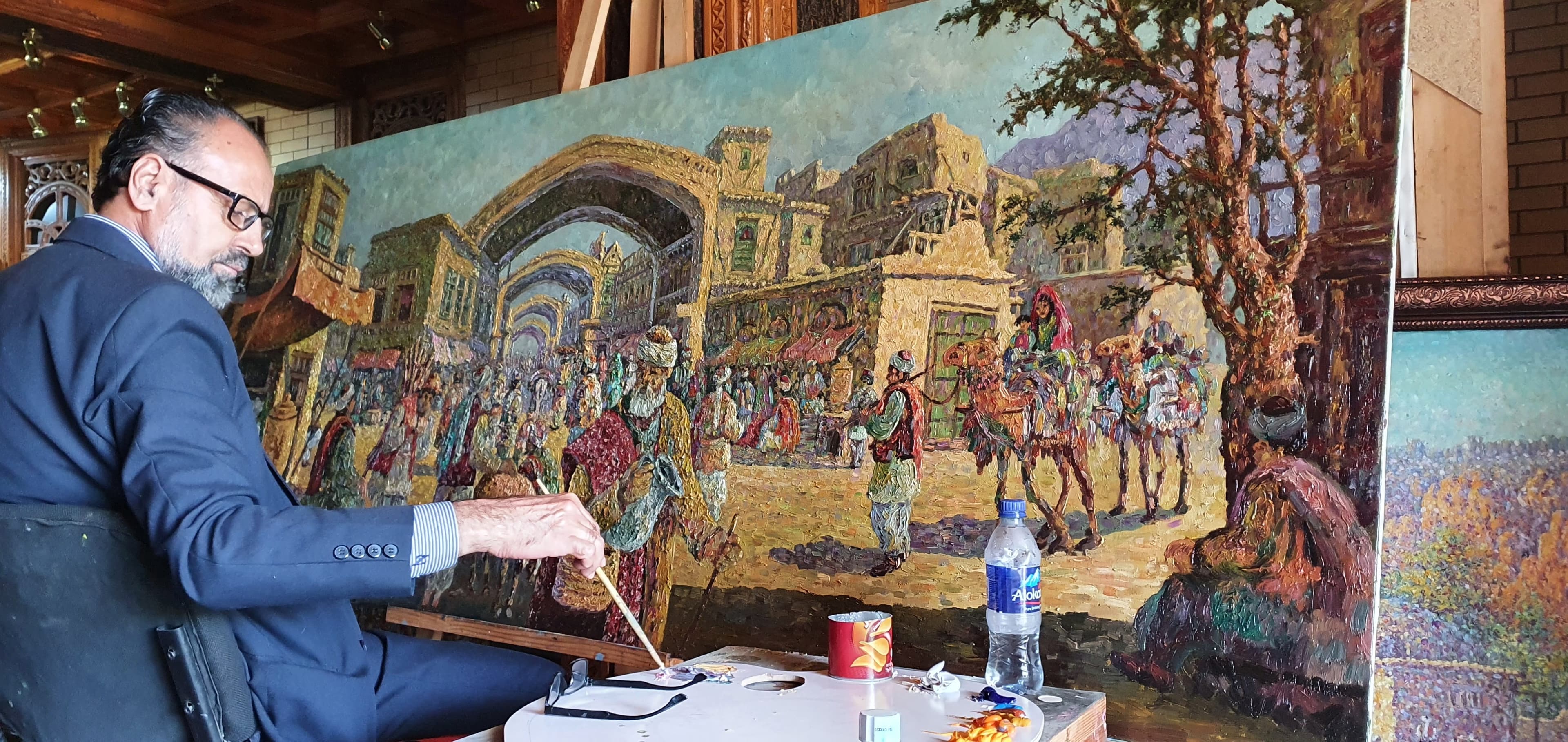
Four decades of work
A Lifetime in Painting
Over four decades, Dr. Asefi has worked across Realism, Impressionism, Expressionism, Symbolism, and Abstract styles, often within a single canvas. He paints with both brush and palette knife, layering oil with a tactile intensity that gives his work a sculptural surface. His paintings hang in the Presidential Palace, the Afghan Parliament, the Prime Minister's Palace, the Foreign Ministry, the Jakarta National Museum, and the Kassel Museum in Germany. He has exhibited across twelve countries on four continents — from Bhutan to Melbourne — and was included in dOCUMENTA 13, one of the most prestigious contemporary art exhibitions in the world. Since 2022, he has continued his practice as a art scholar at Arizona State University.
About Dr. AsefiKabul · 1996 – 2001
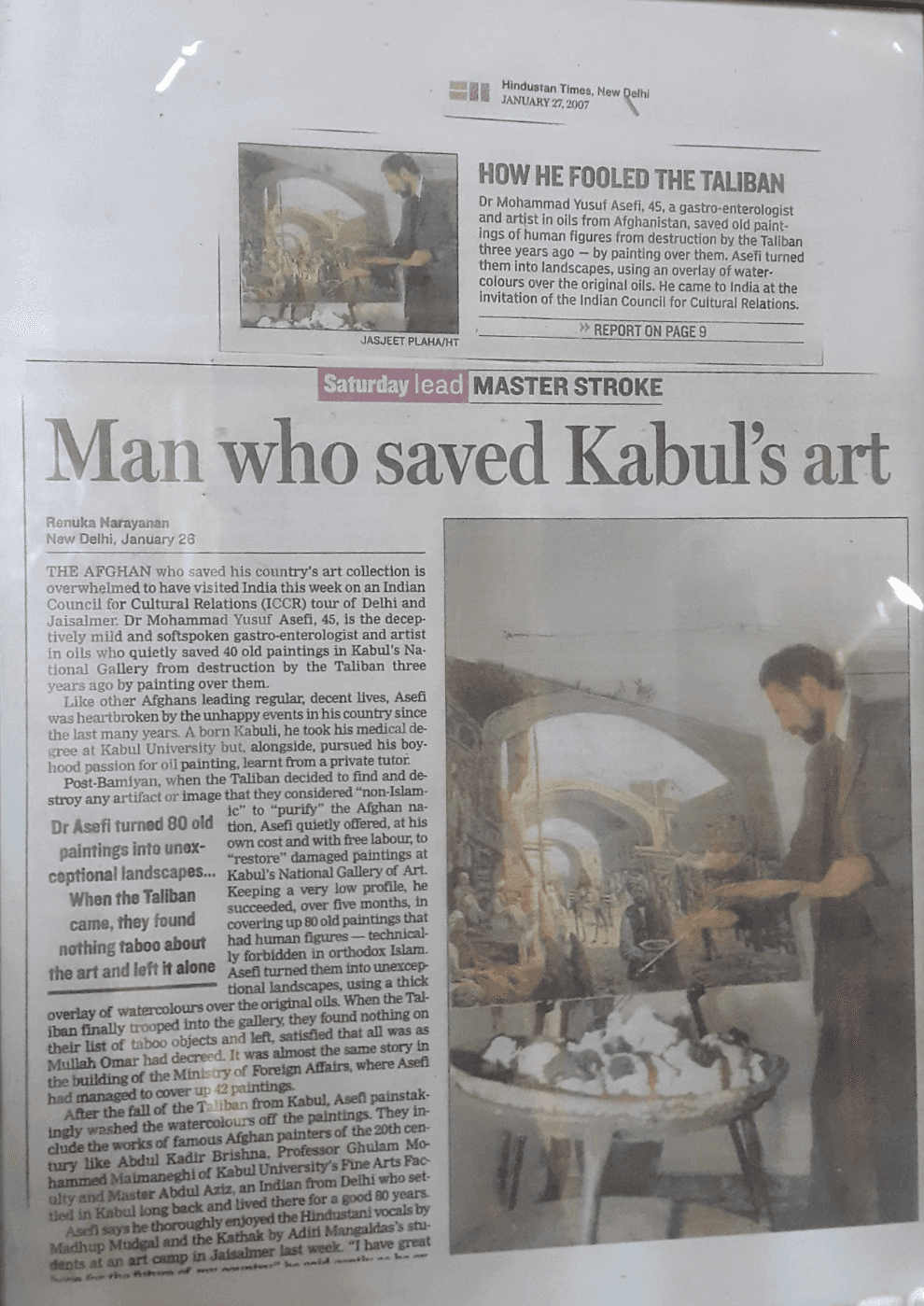
The Man Who Saved Kabul's Art
In September 1996, Taliban fighters swept into Kabul. Among their first acts: a sweeping ban on all depictions of living creatures. Paintings, photographs, sculptures — ordered destroyed. The Ministry for the Propagation of Virtue and the Prevention of Vice began enforcing the ban immediately, tearing apart decades of Afghan visual culture. At least 300 paintings were destroyed from government buildings in the early months alone.
Dr. Mohammad Yousof Asefi, a physician who had abandoned medicine the year before to devote himself entirely to painting, learned that his own works had been torn from the walls of the presidential palace. He had spent years decorating Afghanistan's most important buildings — the presidential palace, the Foreign Ministry, the Prime Minister's residence. More than sixty of his paintings had hung between the presidential palace and the Foreign Ministry.
He had never considered himself political. But watching the systematic erasure of his country's visual memory changed him. Working alone and in absolute secrecy, he devised a technique to hide the paintings in plain sight — painting watercolor foliage over the banned human figures, preserving the oil originals beneath.
Over the next five years, he saved more than 120 paintings (national and international) at the Foreign Ministry and the National Gallery. He told no one. Discovery would have meant imprisonment or death.
The collection
Featured Paintings
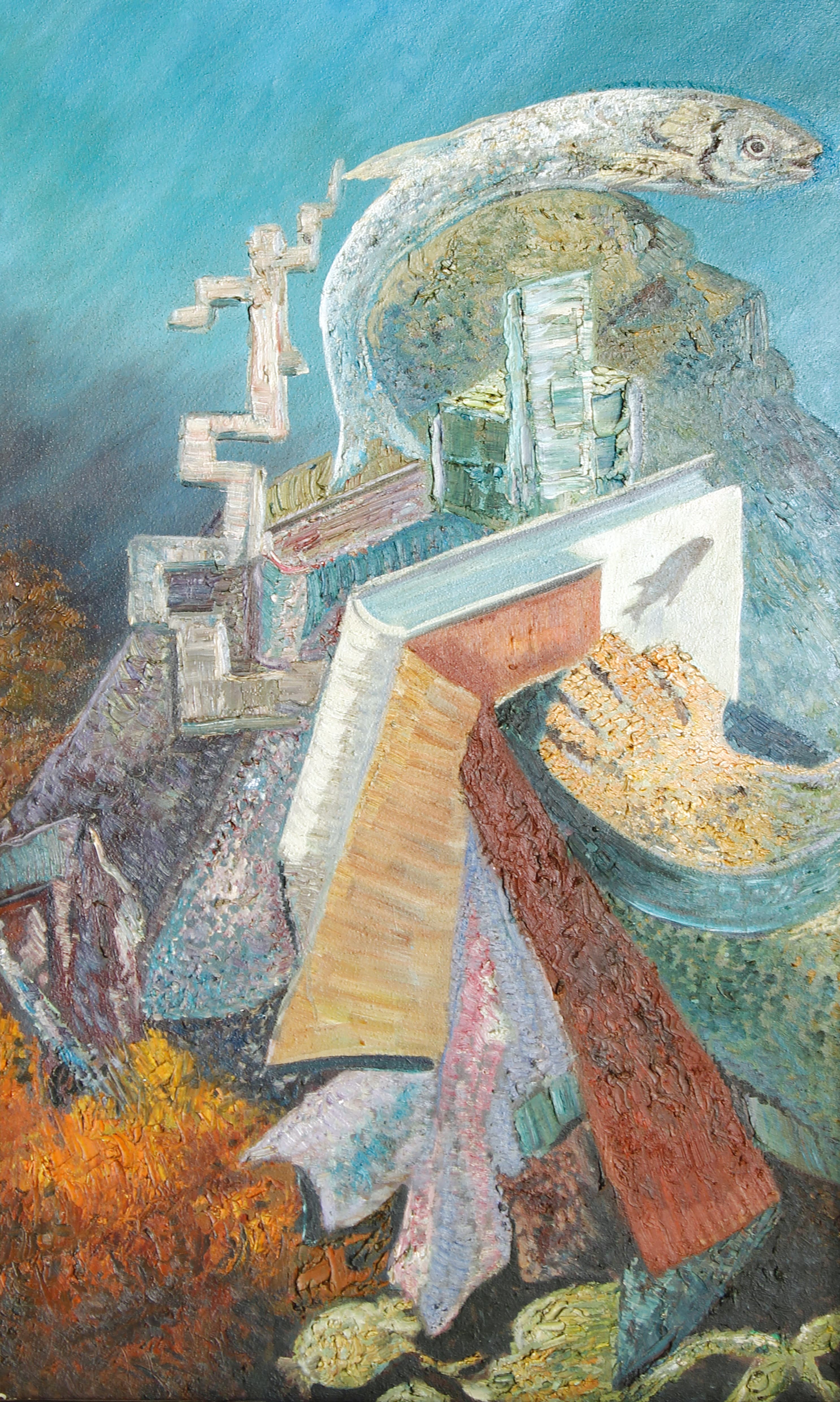
01 / 10 · 2010
Contemplation
Contemplation was displayed at the SAARC Artist Comp and Exhibition in Thimphu, Bhutan and recognized as a Masterpiece. The artwork highlights the need for more attention to be pai…
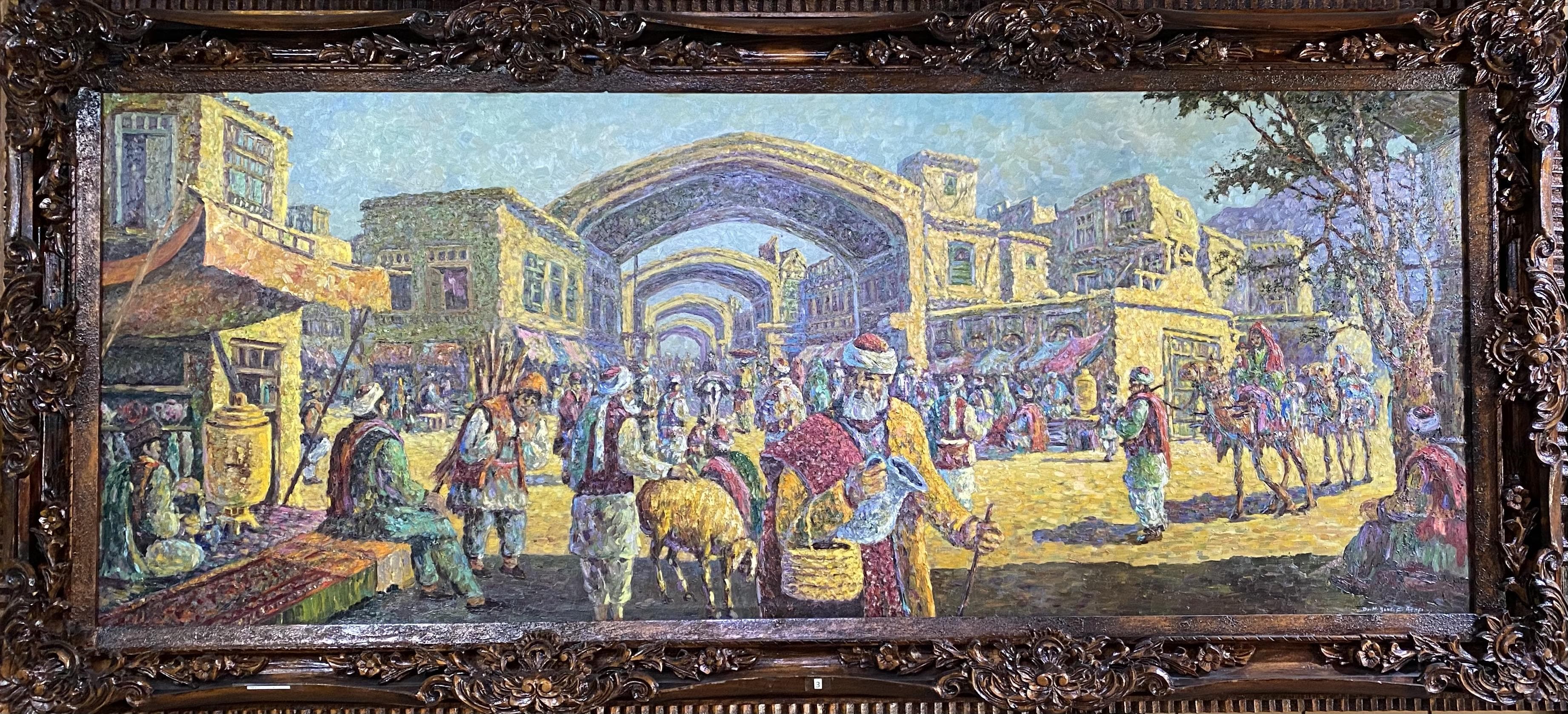
02 / 10 · 2013
Char Cha Tah
The painting illustrates old Kabul business bazaar Char Cha Tah (CCT). It was displayed at the first Milade Kabul Festival at The tableau won the first-place award. & soon become v…
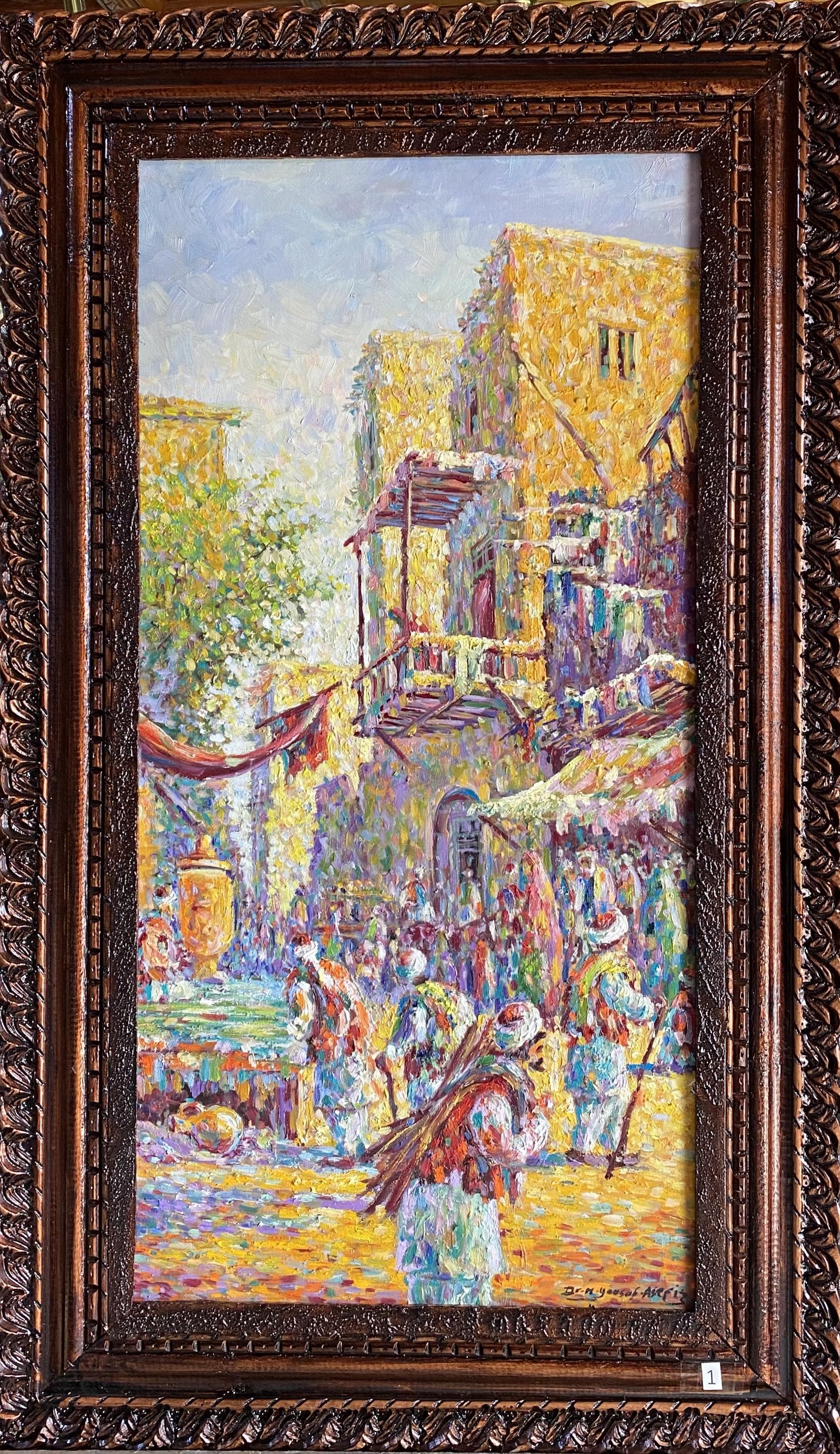
03 / 10 · 1987
Kabul Old City Before
This Painting shows the old city of Kabul before the Soviet invasion.
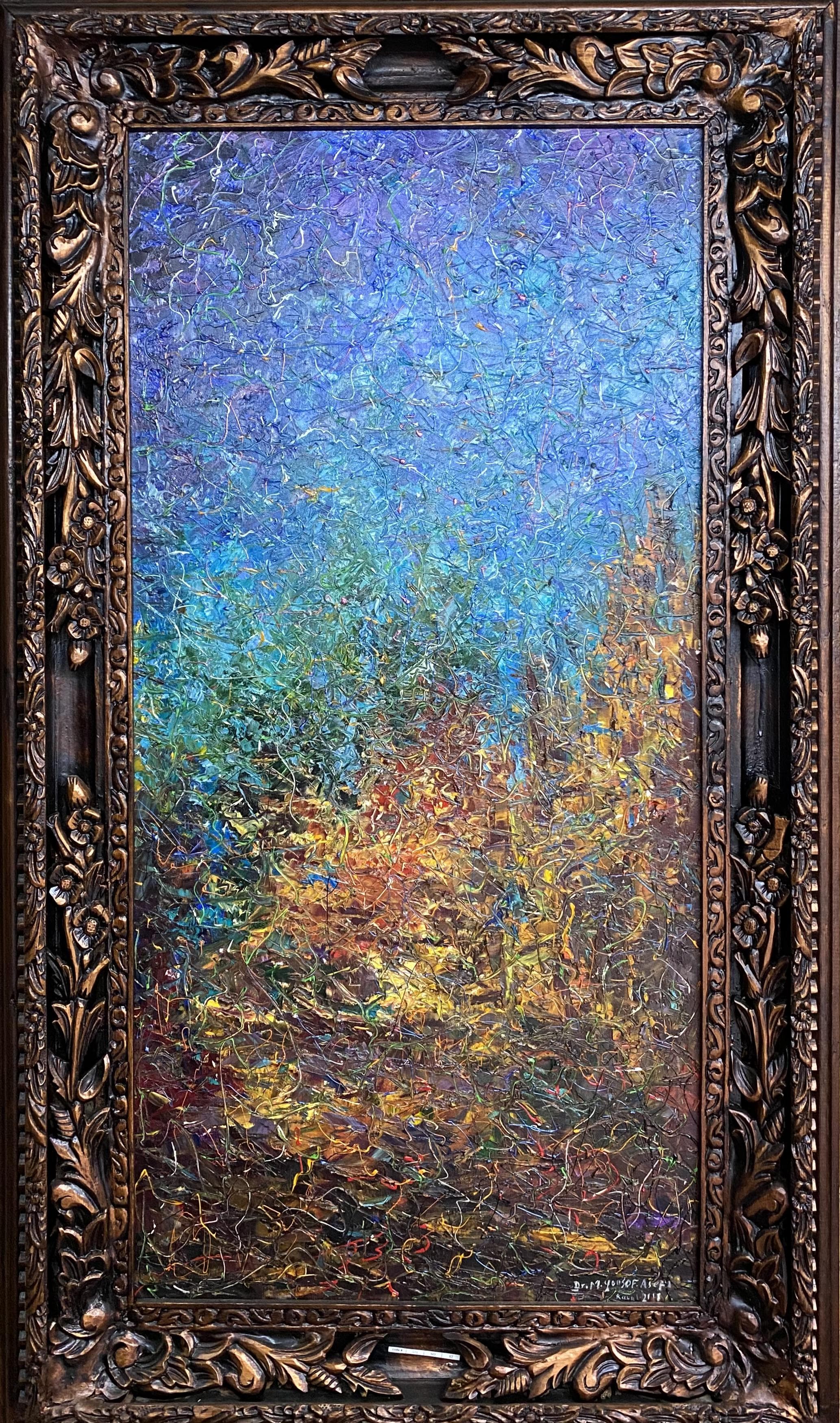
04 / 10 · 2015
Kabul Old City After
A compelling oil painting documenting Kabul's historic district, capturing the the aftermaths of several wars and destruction.
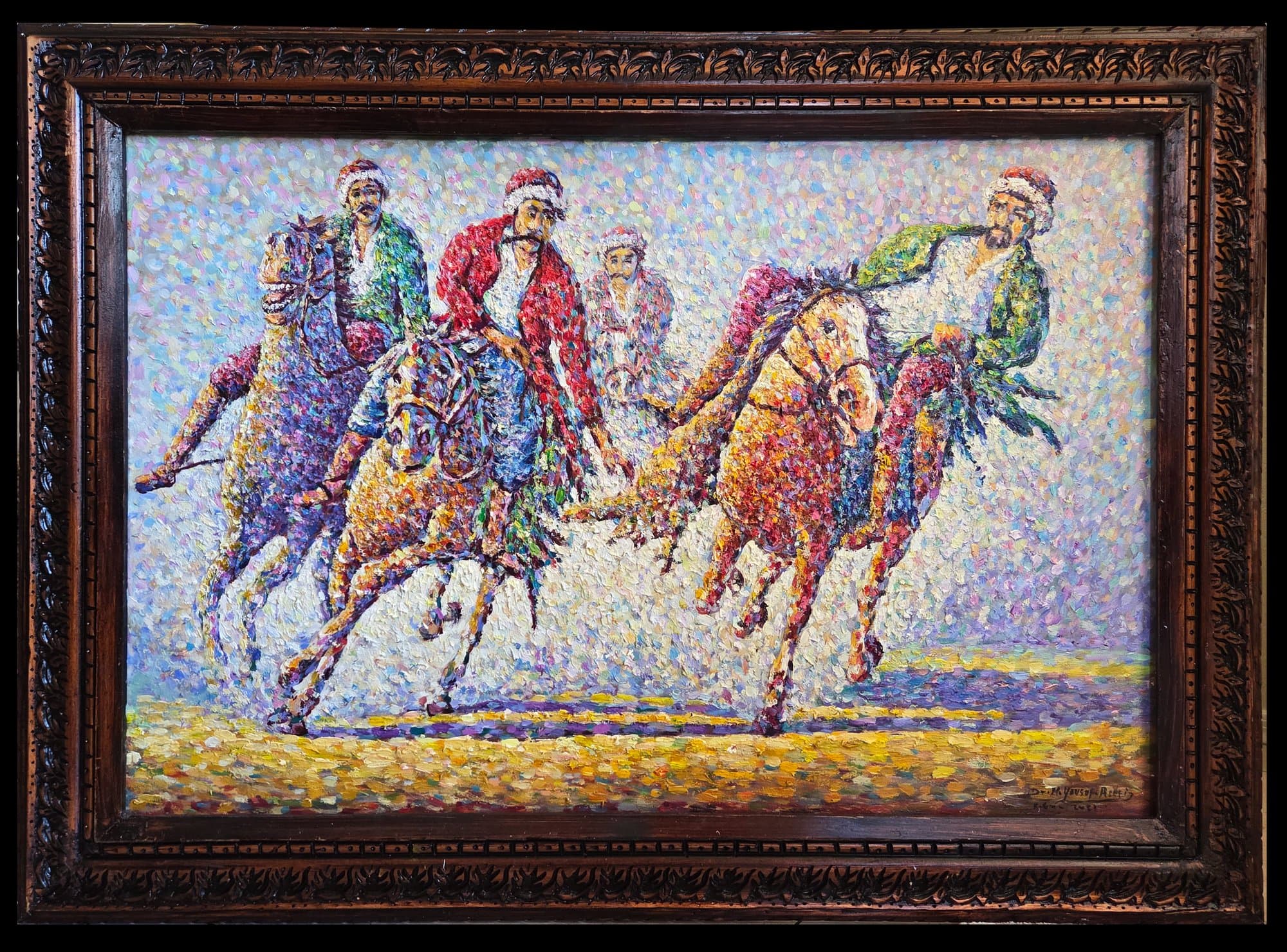
05 / 10 · 2026
Buzkashi
Depicting Afghanistan's national sport, this dynamic composition honors a longstanding cultural tradition rooted in skill, endurance and community identity. The energy of riders an…
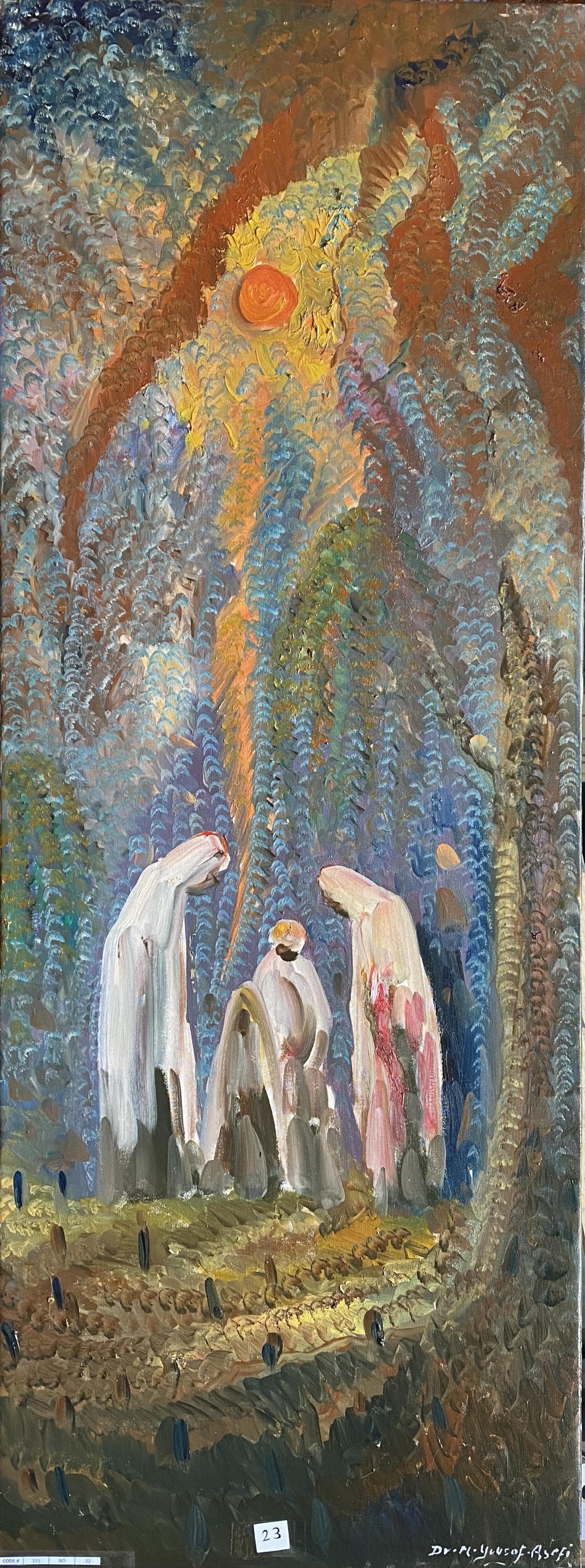
06 / 10 · 2015
Mourning
The painting describes the grief of parents over the death of their child.
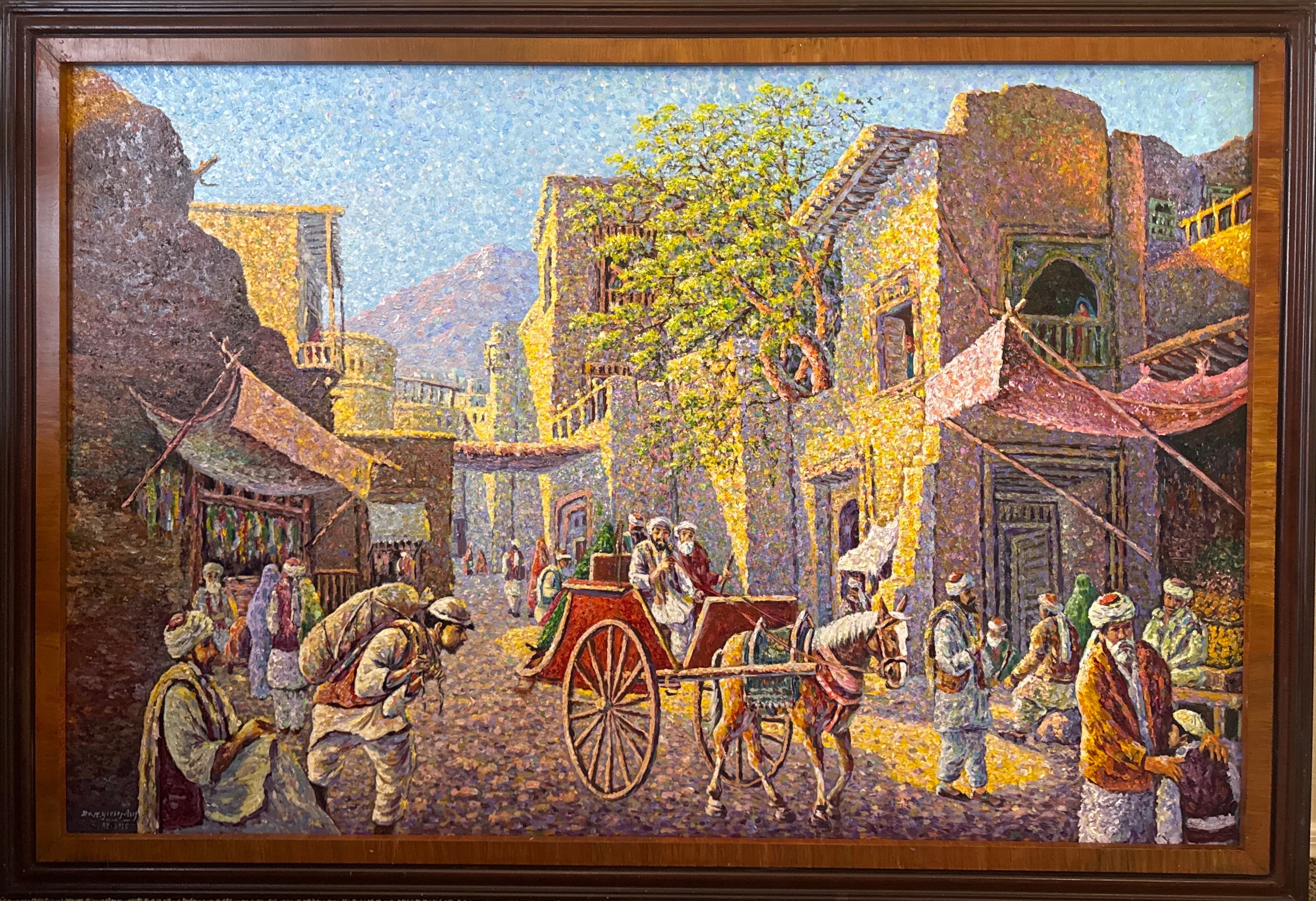
07 / 10 · 2026
Old City of Kabul
Merchants, families and travelers move through a shared civic space, reflecting the vitality of a community shaped by tradition, connection and everyday encounters. The painting pr…
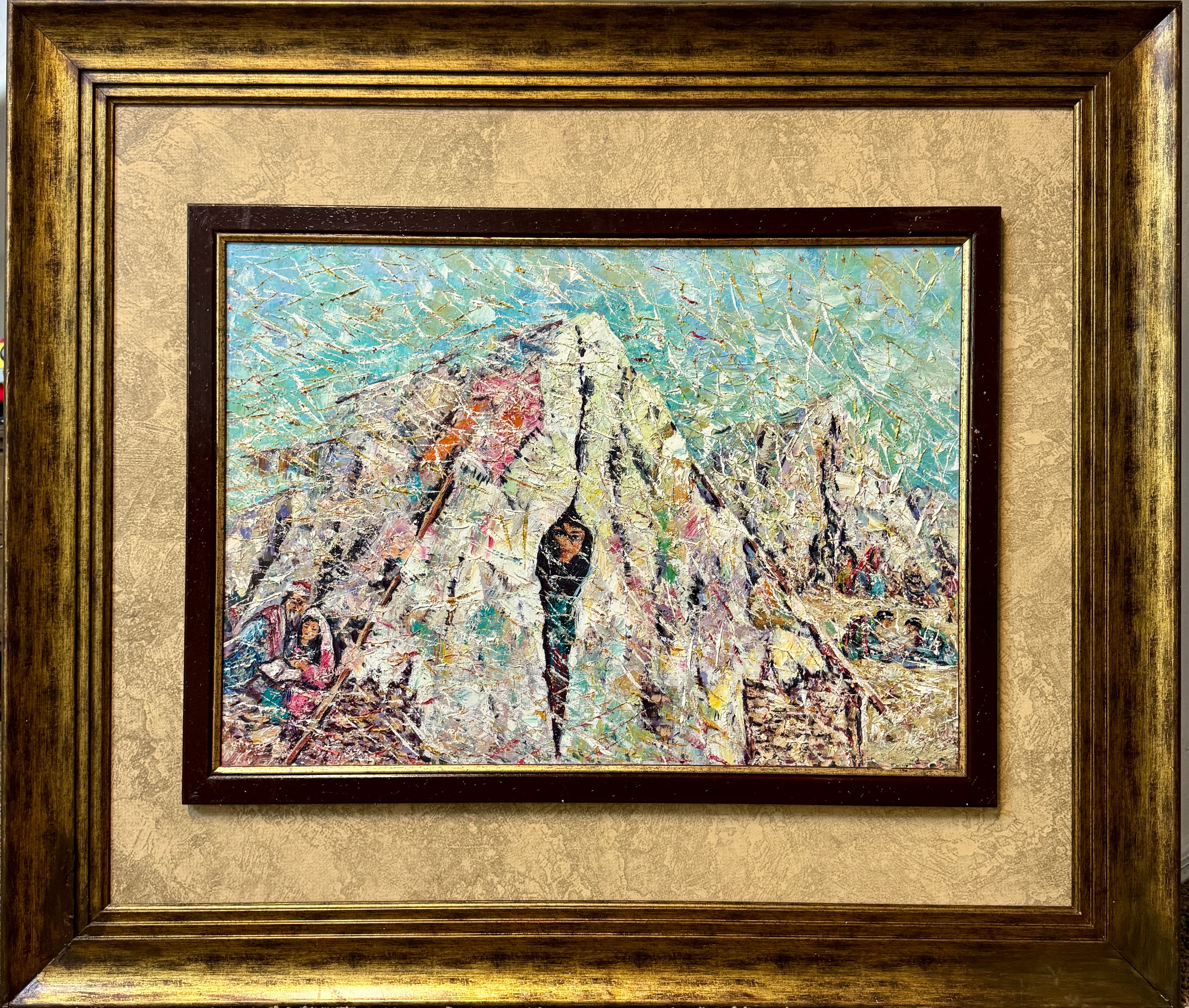
08 / 10 · 2020
Restricted
This painting shows a girl kept in a tent and not allowed to visit outside, unable to do anything; awaiting her marriage.
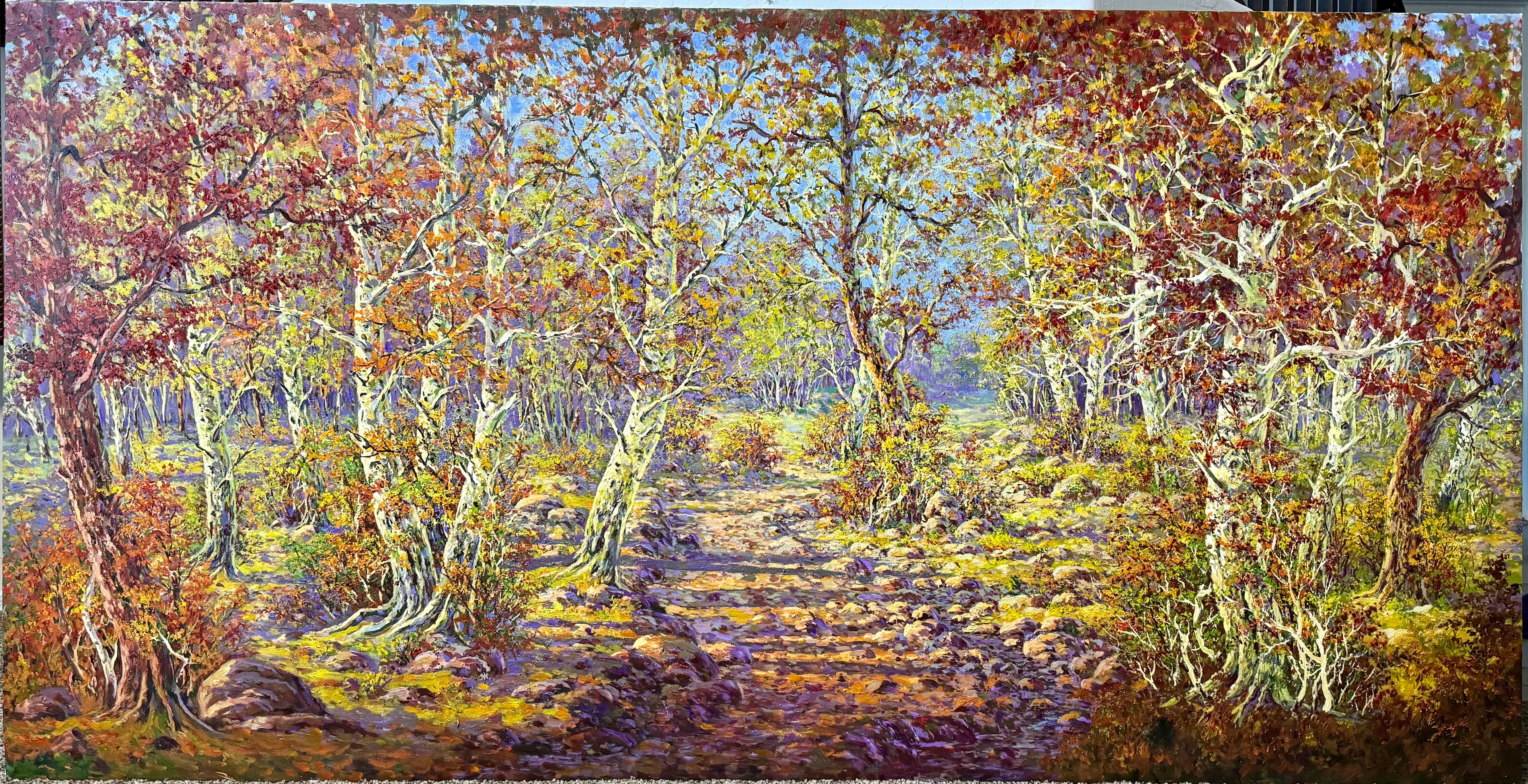
09 / 10 · 2023
Nature - Fall (Paghman-Kabul-Afghanistan)
A scenic nature in Paghman district of Kabul city. Afghanistan.
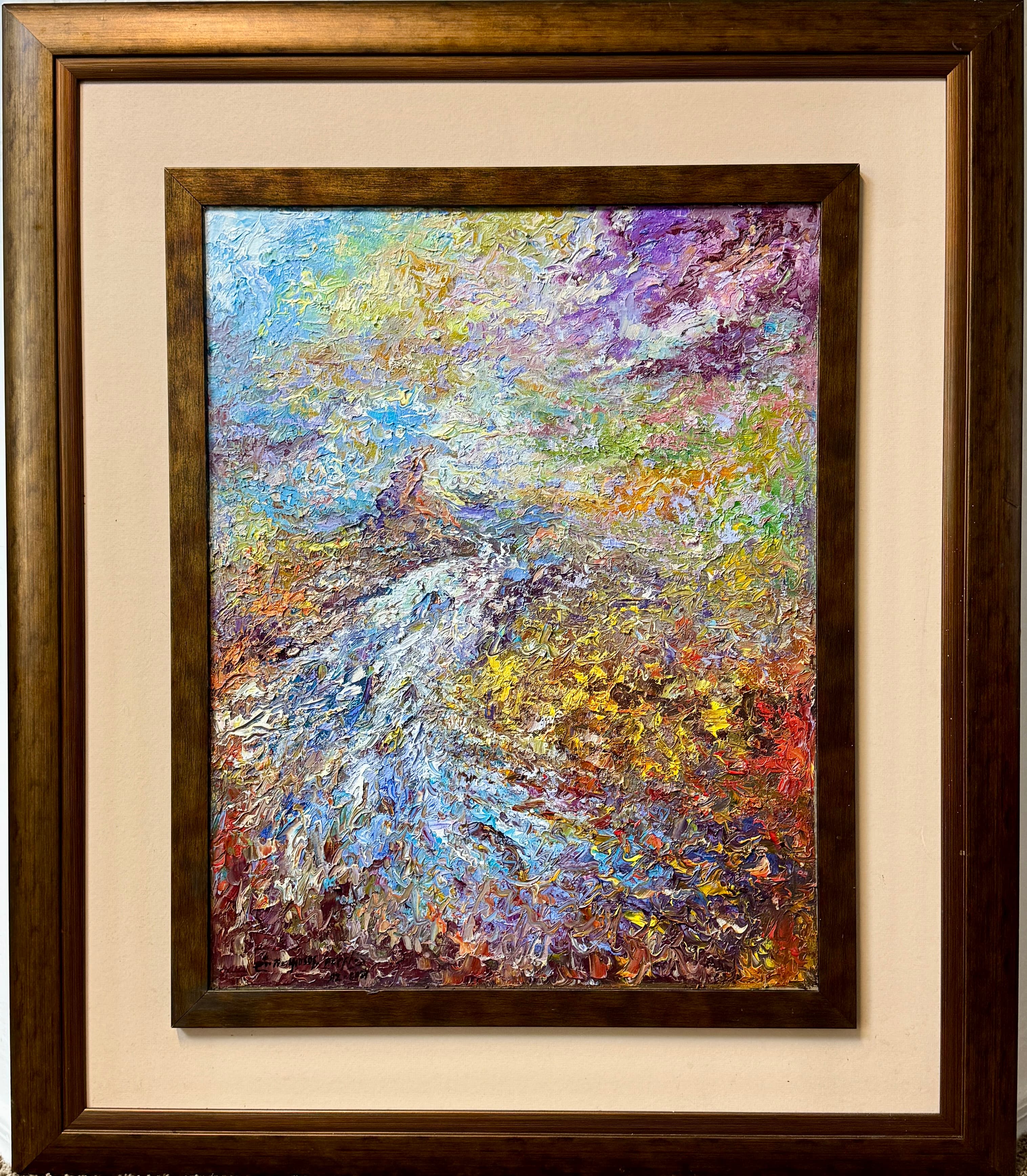
10 / 10 · 2023
Nature - (Takhar-Afghanistan)
Nature from one of Afghanistan's provinces, Takhaar. Painted in an Abstracted way